Booking choice: The off-the-path communism walk, from $21 per person. Check dates Tour details
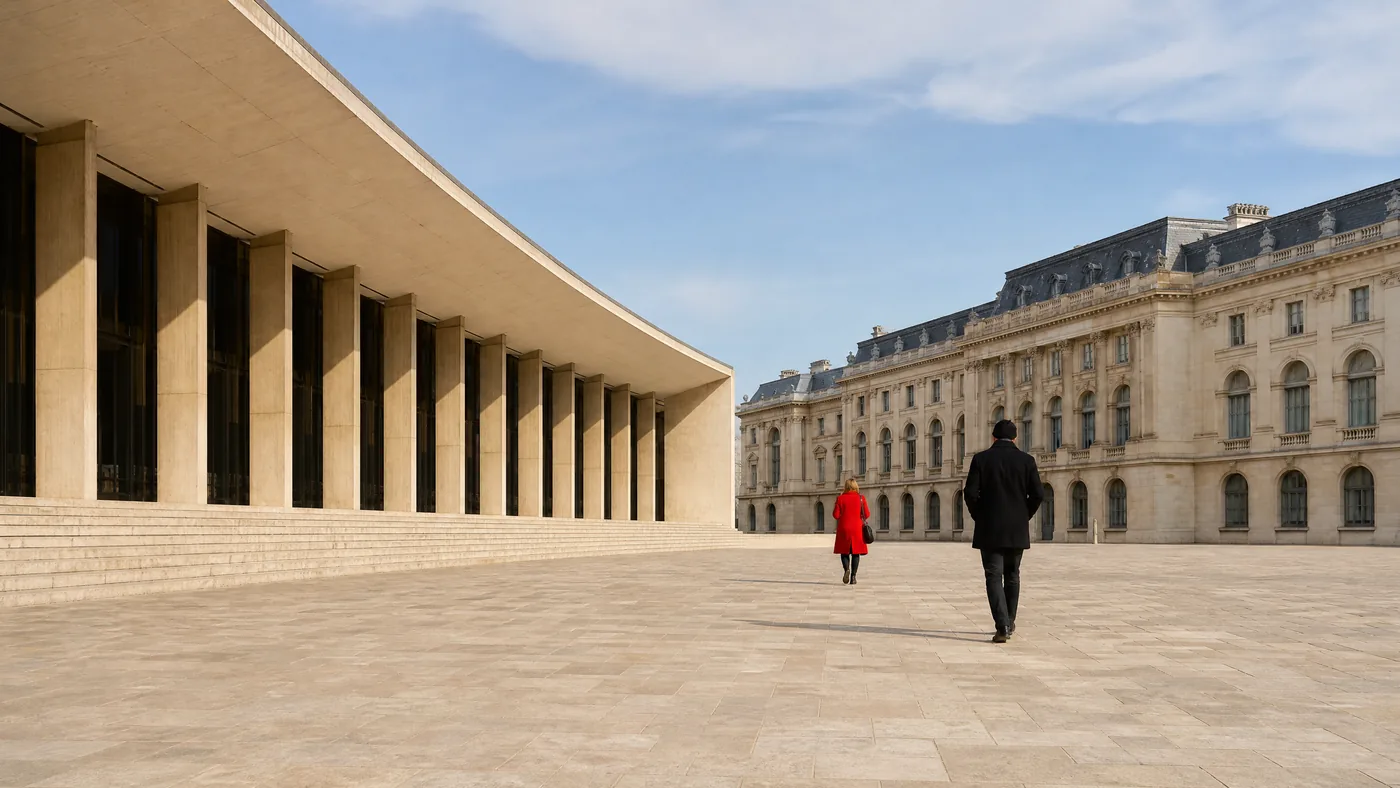
Piața Revoluției sits on Calea Victoriei, Bucharest's grand avenue, in Sector 1. It is not one tidy square but a loose ring of landmarks: the former Royal Palace, the Romanian Athenaeum, the University Library, the Athénée Palace hotel and the former Central Committee building, with Sala Palatului behind the palace on Strada Ion Câmpineanu.
Below you will find what each building is, what happened here in 1968 and in December 1989, what the memorial and the equestrian statue stand for, what you can visit, and which tours start, stop or finish here.
The quick answer
Revolution Square was called Palace Square until 1989 and was renamed after the revolution. Ceaușescu gave his last speech here from the Central Committee balcony on 21 December 1989 and fled from its roof by helicopter the next day. Around it stand the National Museum of Art, the Romanian Athenaeum, the University Library and the Memorial of Rebirth; Sala Palatului is directly behind the museum.
What is on Revolution Square in Bucharest?
The former Royal Palace (the National Museum of Art), the Romanian Athenaeum, the Athénée Palace hotel, the University Library, the former Central Committee, the Memorial of Rebirth and the Carol I statue.
Wikipedia lists the buildings, and it also gives the old name: Palace Square, Piața Palatului, until the revolution of December 1989. Sala Palatului belongs to the same block of history, built behind the palace in 1959 to 1960.
| Building | Built | Today |
|---|---|---|
| Former Royal Palace | 1936 to 1937, Nicolae Nenciulescu | National Museum of Art of Romania, since 1950 |
| Romanian Athenaeum | Opened 1888, Albert Galleron | Concert hall, George Enescu Philharmonic |
| Athénée Palace | 1912 to 1914, Théophile Bradeau | InterContinental hotel |
| Central University Library | Begun 1891, opened 1895, Paul Gottereau | Library, reopened in 2001 |
| Former Central Committee | Completed 1950 | Ministry of Internal Affairs |
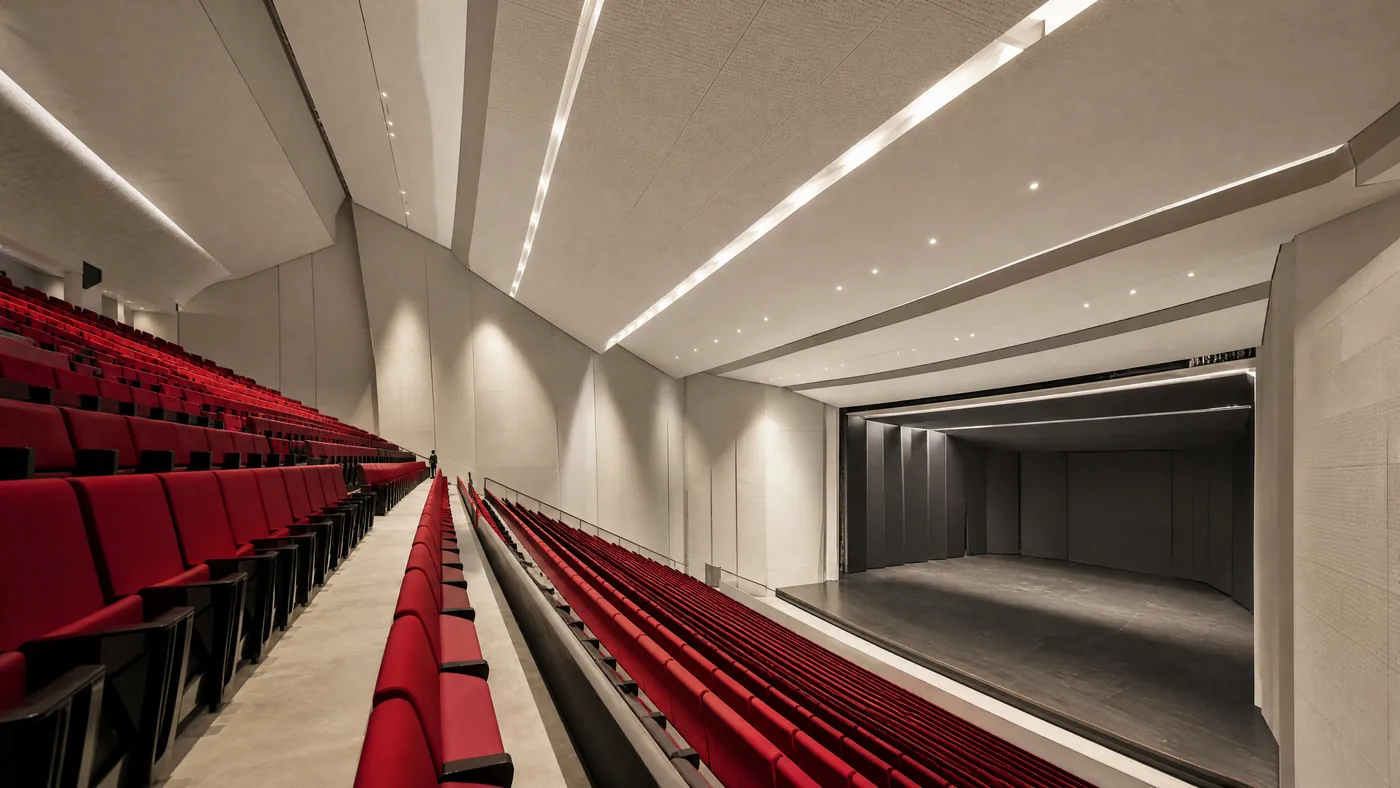
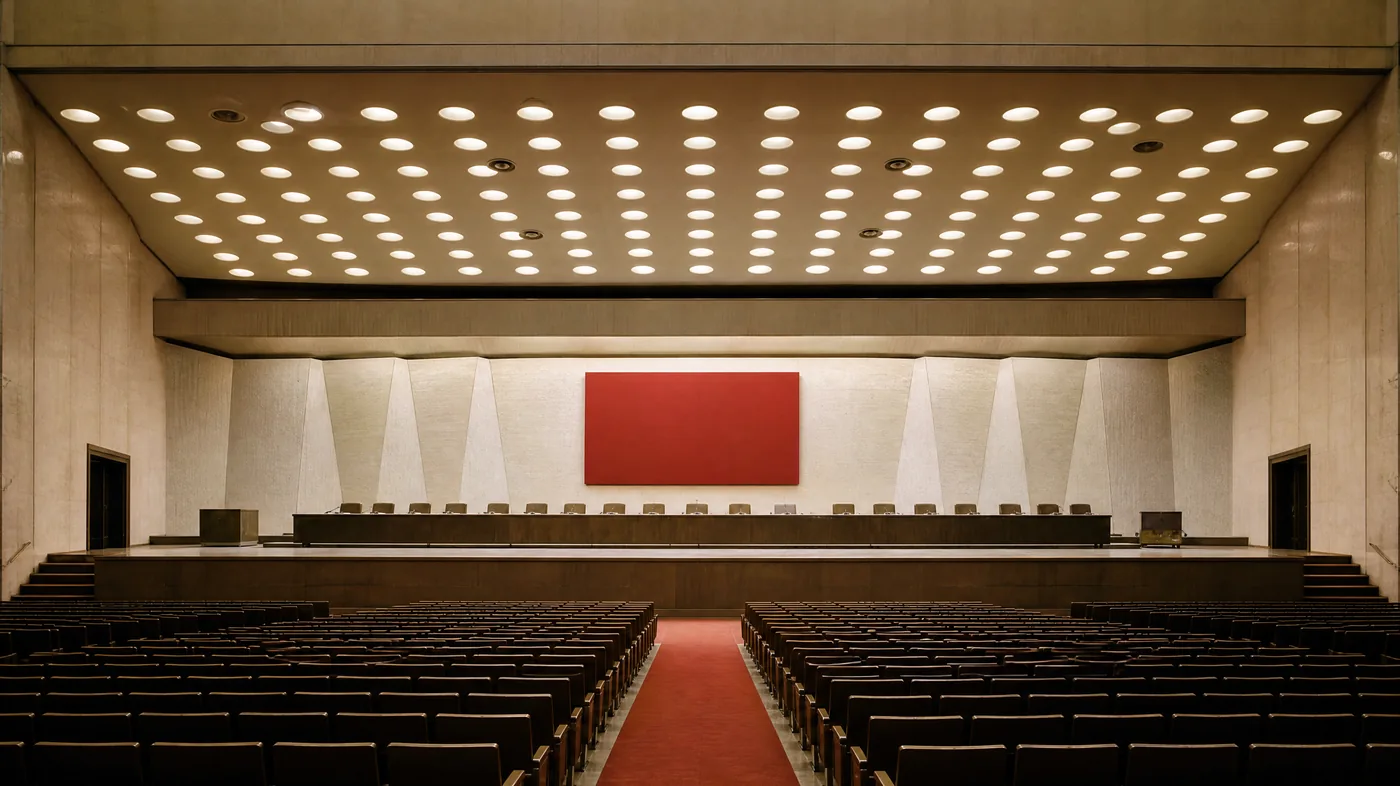
| Sala Palatului | 1959 to 1960 | Concert and conference hall |
| Memorial of Rebirth | 2004 to 2005, Alexandru Ghilduș | Memorial to the revolution |
| Carol I statue | Unveiled 2010, Florin Codre | Equestrian statue |
The former Central Committee was the party's headquarters. DC News says it housed the Central Committee from 1958 to 1989; Wikipedia adds that it became the Senate in 1990 and the interior ministry in 2006.
What happened on Revolution Square in 1968?
On 21 August 1968 Ceaușescu condemned the Soviet-led invasion of Czechoslovakia to a huge crowd, the high point of his popularity.
Wikipedia calls the two mass meetings on this square the apogee and the nadir of Ceaușescu's regime. The first came on 21 August 1968, the morning after Soviet-led troops entered Czechoslovakia. Ceaușescu openly condemned the invasion and set Romania on a course of independence from the Kremlin.
The crowd cheered him. That speech marked the highest point of his popularity, and it became the model for the rally he called 21 years later.
What happened on 21 December 1989?
Ceaușescu spoke to a rally of about 100,000 from the Central Committee balcony. The crowd turned on him, and the rally became the revolt that ended the regime.
Protests had begun in Timișoara on 16 December. To show he still had the country behind him, Ceaușescu called a rally on Palace Square for the morning of 21 December, presented by the official media as a spontaneous show of support. He spoke from the balcony of the Central Committee building to about 100,000 people.
Just over a minute in, a high-pitched scream cut through the square. He kept talking for more than 13 minutes, but the meeting broke apart and turned into a riot. Troops, tanks and armored vehicles fired on the crowd. Wikipedia notes that some of the worst violence happened in front of the Athénée Palace.
The square paid a price in buildings too. The Royal Palace was seriously damaged and partly burned, and Radio Romania International says dozens of major paintings were lost to fire and bullets. The Central University Library burned, with more than 500,000 books and about 3,700 manuscripts.
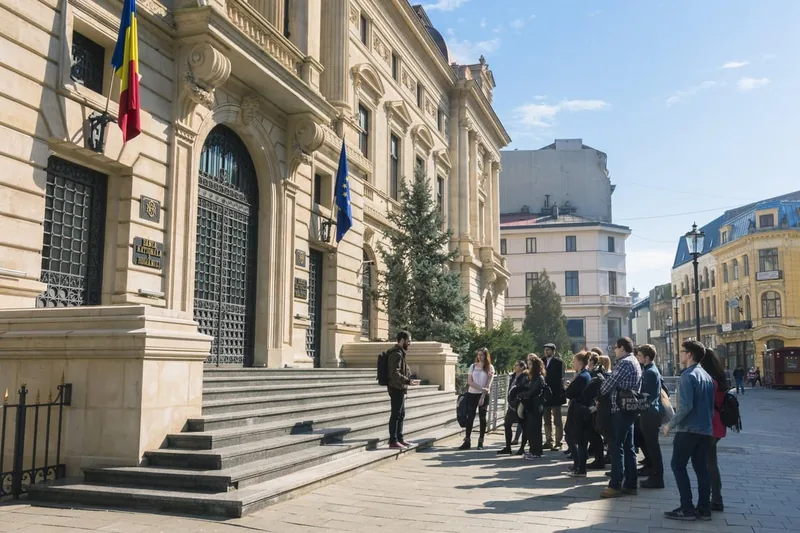
The off-the-path communism walk meets at Piața Revoluției 1, right where the 1989 rally began, and walks past Sala Palatului.
Check dates for the off-the-path communism walkHow did Ceaușescu escape by helicopter?
On 22 December 1989 a helicopter landed on the roof of the Central Committee building and flew Nicolae and Elena Ceaușescu out. They were caught the same day and executed on 25 December.
The end came the next day. Wikipedia says the pilot, Vasile Maluțan, set his helicopter down on the roof terrace at 11:44 and took off at 12:08 for Snagov, with the Ceaușescus on board. After more flights they were forced down near Titu, reached Târgoviște by car and were arrested there in the afternoon.
A military tribunal tried the couple on 25 December in a session of about two hours and sentenced them to death. They were shot outside the improvised courtroom the same day.
More than a thousand people died across Romania in those days. Wikipedia's count is 1,104: 162 in the protests up to 22 December and 942 in the fighting after.
What is the Memorial of Rebirth?
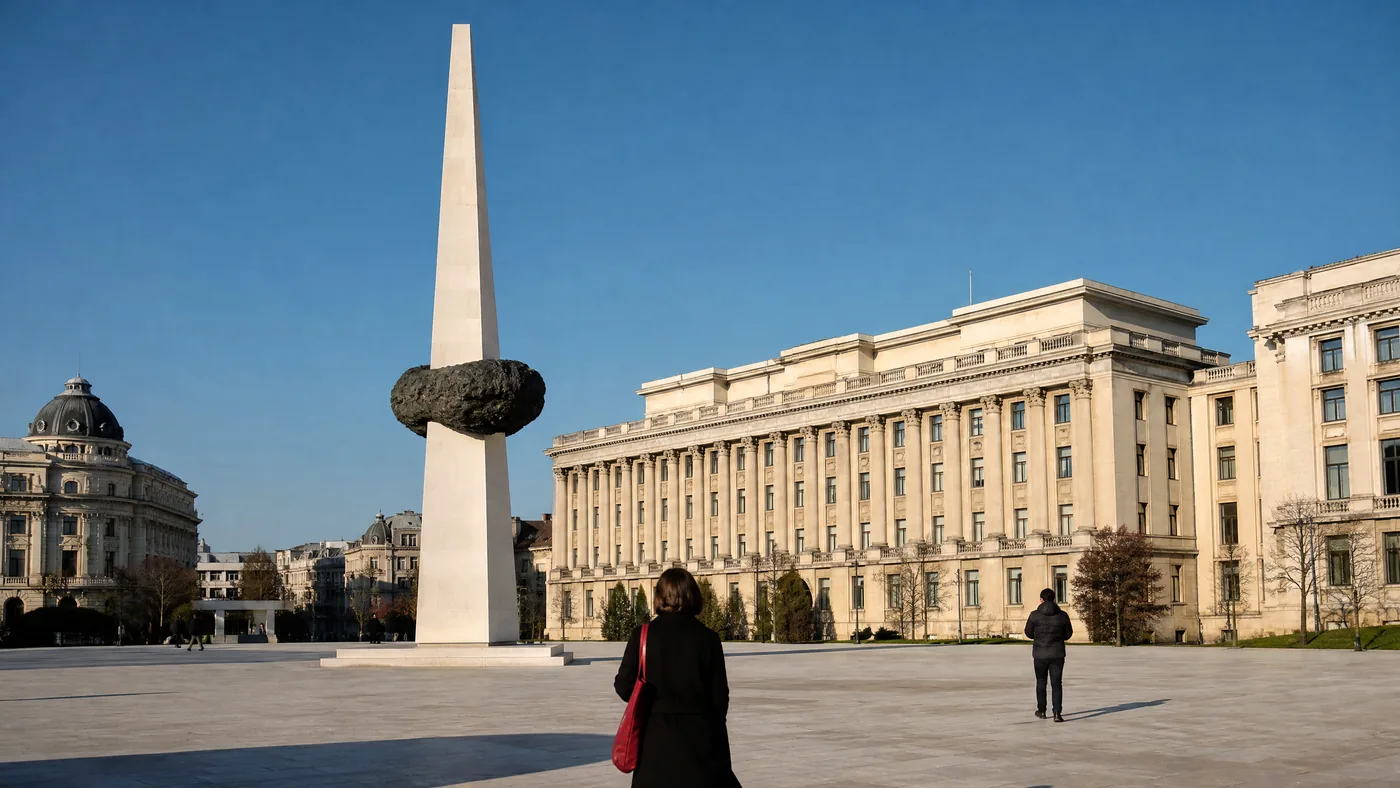
A 25 m white marble obelisk pierced by a dark metal crown, unveiled in 2005 in memory of the victims of 1989, with a wall bearing 1,058 names.
The memorial stands in the middle of the square, in front of the former Central Committee. Its designer is Alexandru Ghilduș, who won a national competition in 2004 that drew 15 teams, according to DC News. The foundation stone was laid on 15 December 2004, bucharest.ro says, and Wikipedia dates the inauguration to August 2005.
- The obelisk: white marble, 25 m tall, with three sides, which bucharest.ro reads as faith, hope and sacrifice.
- The crown: the dark metal form pierced by the column, read as a wound or a flame for those who died in December 1989.
- The Wall of Remembrance: a brass wall with the names of 1,058 victims of the revolution.
- The plaza: about 600 square meters of marble and granite, according to Wikipedia.
Its first name says what it is for: Eternal Glory to the Heroes and the Romanian Revolution of December 1989.
Who is the king on horseback on Revolution Square?
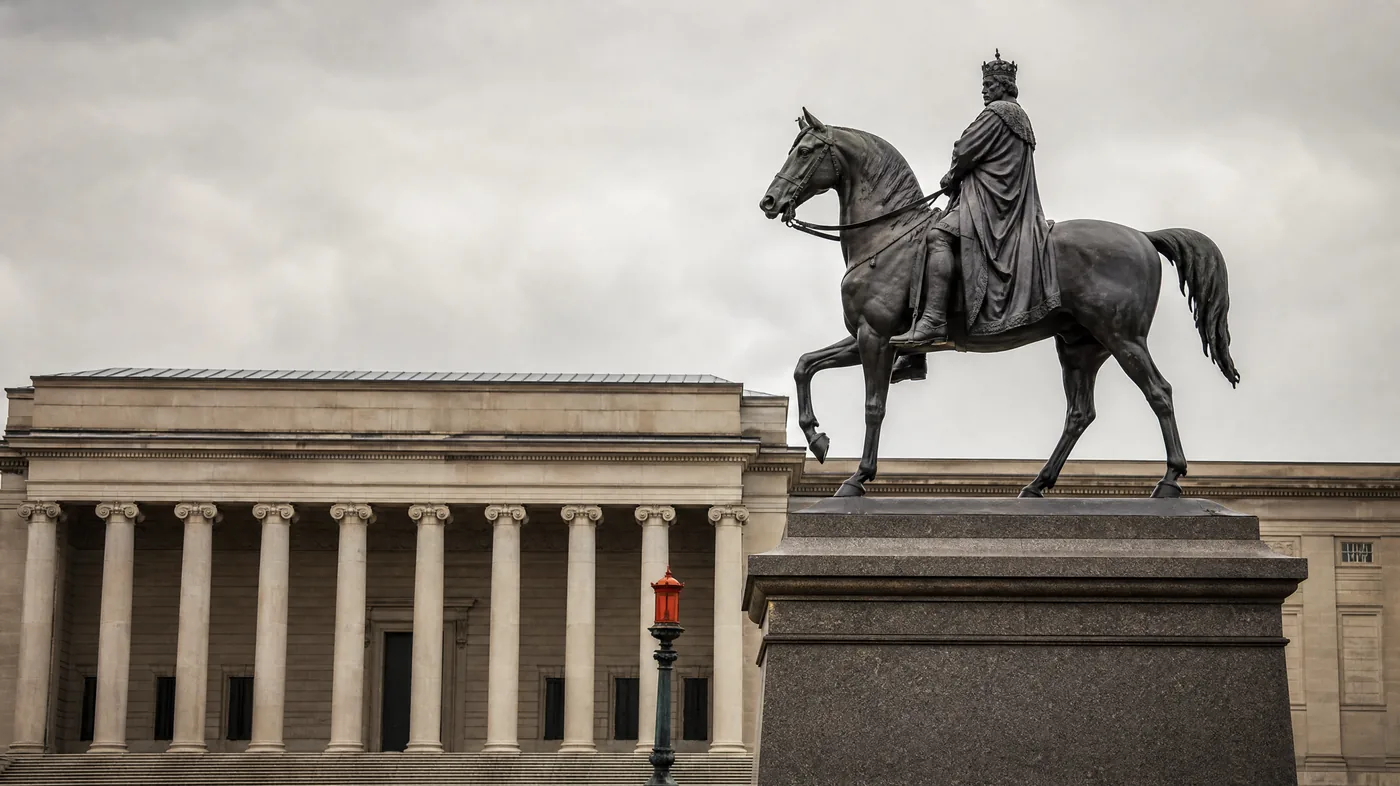
Carol I, Romania's first king. The 2010 statue by Florin Codre replaces Ivan Meštrović's 1930 original, destroyed by the communists in 1948.
Before 1948 an equestrian statue of King Carol I stood on the square. The Croatian sculptor Ivan Meštrović made it in 1930, and the communists destroyed it in 1948. Wikipedia adds that they never paid the sculptor damages.
The return took years. In 2005 the Ministry of Culture decided to recreate the statue from a model kept by Meštrović's family, and in 2007 Bucharest City Hall gave the job to Florin Codre. Wikipedia notes that the design was accused of plagiarism. The new statue was unveiled in December 2010 by Princess Margareta and the mayor, Mediafax reported. It stands in front of the University Library, facing the palace.
The Old Town and Calea Victoriei tour spends its first 15 minutes here, telling the stories of the kings and the world wars.
Starts at the Romanian Athenaeum, spends 30 minutes on Revolution Square and the former Communist Party headquarters, then follows Calea Victoriei into the Old Town.
Explore the Old Town and Calea Victoriei tour Tour detailsWhat can you visit on Revolution Square?
The National Museum of Art in the former Royal Palace, the Romanian Athenaeum on a guided tour or at a concert, and Sala Palatului on a concert night.
- The National Museum of Art of Romania: in the former Royal Palace. Wikipedia describes medieval and modern Romanian art, sculpture by Constantin Brâncuși, and an international collection built on King Carol I's paintings, with El Greco, Rembrandt and Rubens. Check the museum's own site for hours.
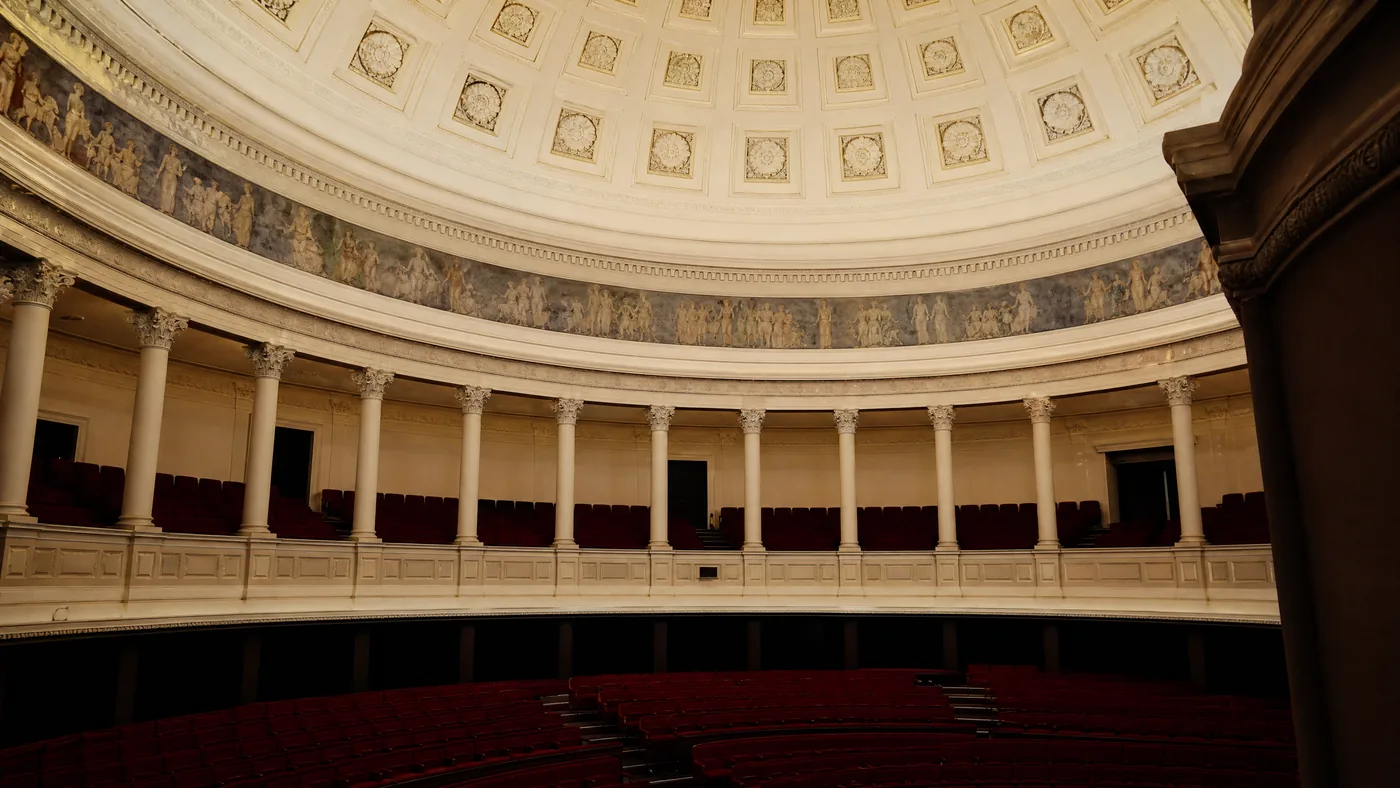
- The Romanian Athenaeum: the domed concert hall of 1888, with a 75 m painted fresco of Romanian history inside. You see it at a concert or on a guided tour of the Athenaeum.
- Sala Palatului: no public tours; you go in with a ticket for a show, bought from the organizer through the hall's ticket office or the ticket platform named on the event page. Our ticket guide explains how.
- The University Library: a working library; its facade and the statue in front are the picture.
- The former Central Committee: now the interior ministry, seen from outside. Look up at the balcony of 21 December 1989.
A good plan is a walk on the square by day and a show at the hall in the evening; the doors are a few minutes round the palace.
Inside the Romanian Athenaeum across the square: the domed hall, the marble vestibule and Costin Petrescu's fresco on a private guided tour.
Check dates for the Romanian Athenaeum tourWhich tours stop on Revolution Square?
Six tours on this site start, stop or end here. The off-the-path walk meets on the square, the Calea Victoriei tour starts at the Athenaeum, and three communism tours finish here.
Lengths and prices come from each listing. None of them is a ticket for a show at Sala Palatului.
| Tour | On Revolution Square | Length | From |
|---|---|---|---|
| Off-the-path communism walk | Meets at Piața Revoluției 1; the interior ministry, the former Securitate headquarters and Sala Palatului | 2.5 hours | $21 per person |
| Old Town and Calea Victoriei | Starts at the Athenaeum; the Carol I statue and the square | 2.5 hours | $20 per person |
| Communism walking tour | Ends here with the story of the end of the regime | 2 to 3 hours | $23 per person |
| The Real Tour of Communism | Ends on the square | 3 hours | $25 per person |
| Communism tour with the museum | Ends on the square | 3 hours | $39 per person |
| City highlights walk | Passes the Royal Palace and the Athenaeum on Calea Victoriei | 2.5 hours | $24 per person |
For the walk that sees the most of the square and the hall, take the off-the-path tour. For the royal side, start with the Calea Victoriei tour. Our history of Sala Palatului covers the hall itself.
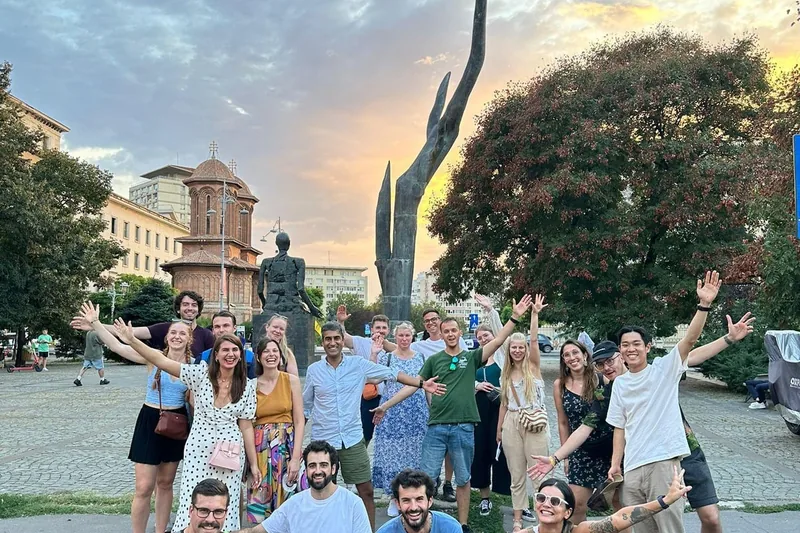
Meets at Piața Revoluției 1 and walks two and a half hours past the former Securitate headquarters, Sala Palatului and Cișmigiu to the Palace of Parliament.
Explore the off-the-path communism walk Tour detailsFrequently asked questions
Why is it called Revolution Square?
It was Palace Square, after the Royal Palace, until 1989. It was renamed after the Romanian Revolution of December 1989, which began in earnest here at Ceaușescu's rally on 21 December.
Where did Ceaușescu give his last speech?
From the balcony of the former Central Committee building on Revolution Square, on 21 December 1989, to a crowd of about 100,000. The building now houses the Ministry of Internal Affairs.
How many people died in the Romanian Revolution?
Wikipedia counts 1,104 deaths across Romania. The Wall of Remembrance at the Memorial of Rebirth carries 1,058 names.
How far is Sala Palatului from Revolution Square?
It is on the square, directly behind the National Museum of Art, at Strada Ion Câmpineanu 28. You walk round the palace to reach it.
Ready to book
Choose your tour
Free cancellation up to 24 hours before on every option. Prices are from-prices in USD and move with the season.
Bucharest Under Communism Walking Tour
Everyday life under the regime, from the square past the hall
Old Town, Calea Victoriei and Communism Tour
- Professional local guide
- Map of Bucharest
- Revolution Square and Calea Victoriei
Bucharest Communism Walking Tour
- Guided walking tour
- About 15 stops
- Communist-era snack on the 3-hour version